How our networks are adapting to people’s needs
First introduced in the 1990s, 2G was a major milestone in the development of mobile communications. But a lot has changed since then. Today, we browse the internet and stream videos on the move. We use apps to share data and connect more and more devices. All of this calls for faster, more capable networks.
Switching off 2G across mainland France marks another step in modernizing Orange’s mobile network. It follows the first shutdown on Réunion Island in 2025, followed by several phases across mainland France and the French Caribbean and Guiana in 2026. In Mayotte, the shutdown is planned by the end of 2026.
From 2G to 5G: Four generations of digital mobile networks
The first generation of mobile networks arrived in the 1980s. These networks used analog signals to carry voice calls rather than converting speech into digital data. Making calls was all they could do.
Mobile phones really began to take off with the arrival of 2G and the shift to digital networks.
2G, 1990s: Digital technology improved call quality and introduced text messaging.
3G, 2000s: Mobile internet took off, bringing web browsing and the first multimedia services to our phones.
4G, 2010s: Much faster data speeds made video streaming and online apps easier to use.
5G, 2020s: Greater network capacity and faster speeds help meet the needs of connected devices and industrial applications.
More useful networks, with better security and energy efficiency
With 2G switched off, the 5 MHz of spectrum previously reserved for it can now be used to strengthen 4G and 5G networks. Reusing these frequencies increases network capacity, helping us keep pace with growing demand for internet access, data sharing, connected services and business applications.
Modernizing our networks also means making communications more secure. Both 4G and 5G have more advanced authentication and encryption mechanisms than 2G.
There’s an energy benefit too. According to the French Telecommunications Federation, transmitting one gigabyte of data over 2G can consume up to 500 times more energy than over 5G. It’s a striking illustration of the difference between generations of mobile technology, although actual energy consumption depends on how the network is used.
Keeping connected services running after 2G
When we think of 2G, old mobile phones probably come to mind. But plenty of other services also relied on the network, including personal emergency response devices, remote monitoring systems, elevator alarms, remote alarm systems and connected equipment used by businesses. Now that 2G has been switched off, equipment that depended on it needs to be replaced or adapted so it can continue sending information and alerts.
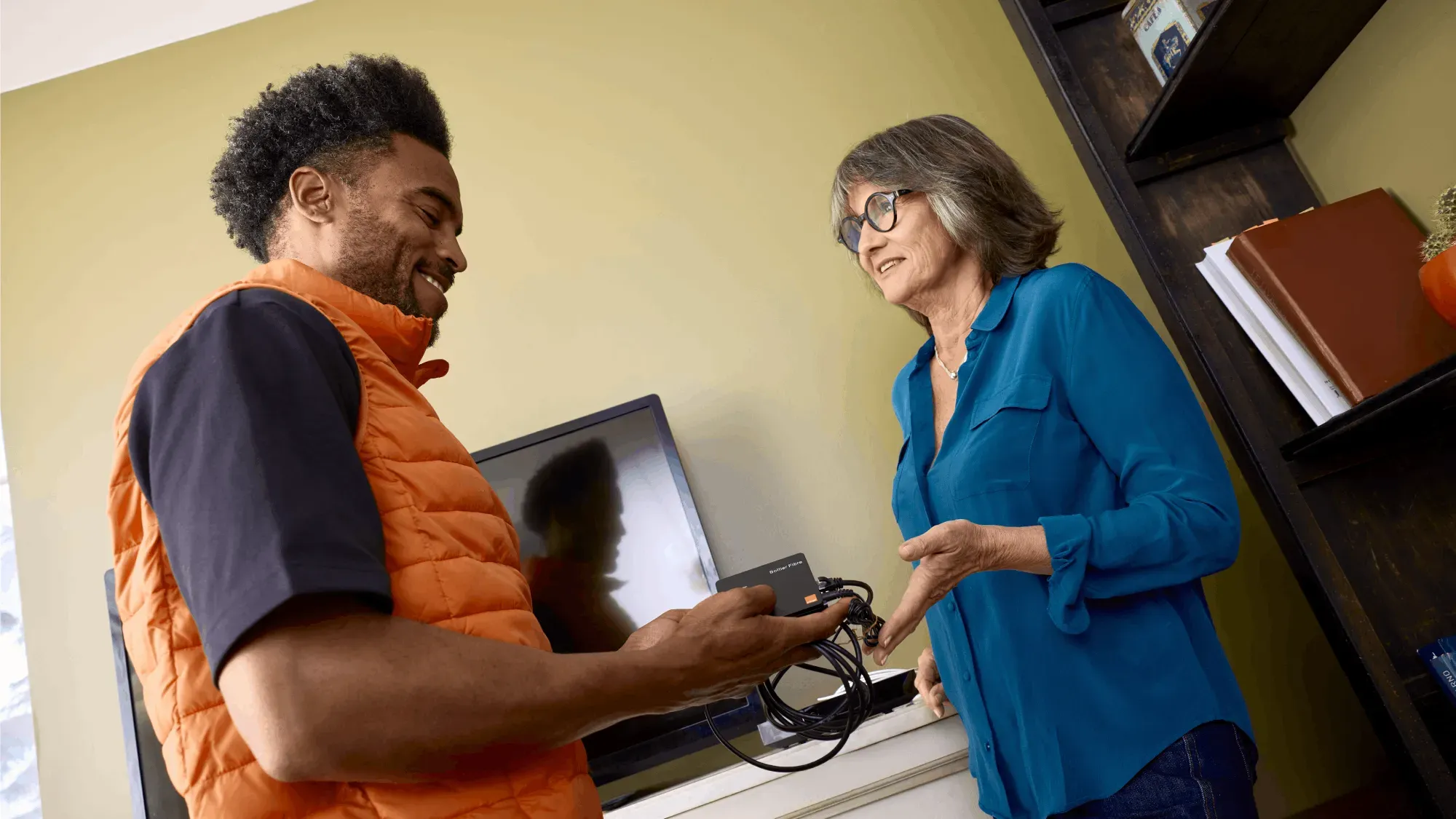
Of course, this change didn’t happen overnight. Orange spent several years preparing for the shutdown, with multiple information campaigns to help those affected. Users were encouraged to contact their operator, service provider, installer or equipment manager to find a solution compatible with current networks.
Orange France also has a special trade-in offer for people still using a 2G mobile phone.
| 2G | 3G | |
|---|---|---|
| Belgium | Shutdown in 2028 | Switched off |
| Spain | Shutdown by 2030 | Shutdown in 2027 |
| Mainland France | Switched off | Shutdown in 2028 |
| Luxembourg | Shutdown in 2030 | Switched off |
| Moldova | No shutdown date as yet | Shutdown by 2027 |
| Poland | Shutdown by 2030 | Switched off |
| Romania | Shutdown by 2030 | Switched off |
| Slovakia | Shutdown by 2030 | Switched off |
Modernizing mobile networks across Europe
France is part of a much bigger shift away from older mobile networks. Around the world, more than 200 operators have already switched off at least one older technology, either 2G or 3G. And in every European country, at least one operator has started this transition.
Orange is managing the change across its European markets, with plans to phase out 2G and 3G between 2025 and 2030. Following Slovakia in 2024, several other countries reached important milestones in 2025, including the 3G shutdowns in Belgium, Luxembourg, Romania and Poland.
In France, 3G is next, with the shutdown scheduled for 2028. As with 2G, equipment that still relies on this technology will need to be upgraded or replaced in advance.
Preparing for the transition has taken a huge team effort. Orange’s technical and sales teams worked closely with partners, local authorities, government departments and industry associations. Nearly 350 Orange employees took part in a coordinated monitoring effort, both locally and nationally, to help address situations requiring special attention.
Key takeaways
- 2G is now switched off in mainland France: Orange shut down its 2G network in the last 43 departments on 20 October 2026.
- Better network performance: The 5 MHz of spectrum freed up by the shutdown is being reassigned to 4G and 5G to support growing demand for digital services.
- Stronger security and better energy efficiency: Newer mobile technologies offer more advanced security protections and consume less energy.
- Making sure connected services keep working: Phones, personal emergency response devices, remote monitoring systems and business equipment that relied on 2G now need to use solutions compatible with current networks.
- Modernization across Europe: Orange plans to phase out 2G and 3G across its European markets between 2025 and 2030. In France, the 3G shutdown is scheduled for 2028.