How Orange supports employees affected by violence
One in three women worldwide has experienced physical or sexual violence during her lifetime, most often from an intimate partner. And 37% of victims confide in a colleague*. In addition, 55% of people who have experienced domestic violence say it has affected their work, through lateness, absenteeism, or being present but unable to perform at their best.
Companies have both the power and the responsibility to act when it comes to domestic violence. By protecting the health and safety of our employees, we reduce the impact on their professional lives, support collective performance, and fully embrace our social role. Listening, identifying warning signs, offering support, adapting working conditions, and training teams are not just part of our responsibility as an employer. In some cases, they can literally save lives.
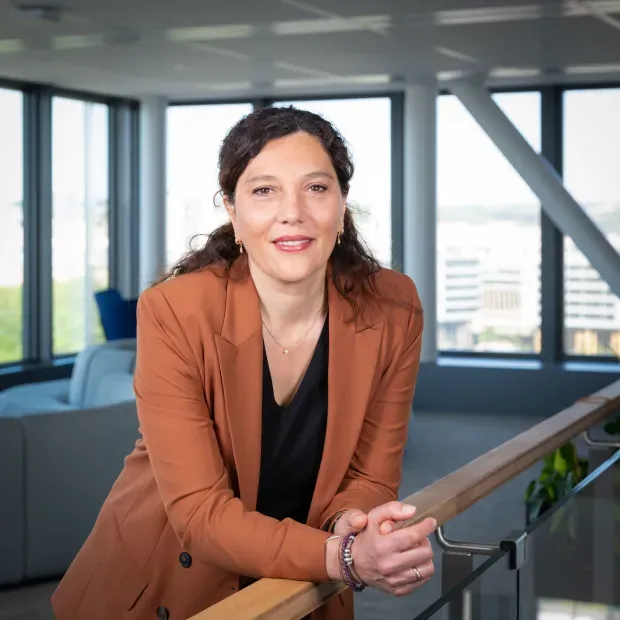
Delphine Pouponneau says, “Since 2015, we have been signatories of the UN Women’s Empowerment Principles, reaffirming our commitment to gender equality and the protection of women. In 2019, we included a dedicated clause on combating violence against women and discrimination in our global social agreement. We also joined the OneInThreeWomen network, which brings together companies that share best practices and training.
We commit to offering tailored support to any employee, women or men, who experience violence and ask for help. Depending on local context, this can include flexible working hours, a change of work location, emergency housing support, or emergency financial assistance. In France, our social workers support each employee step by step. In some cases, that even means finding emergency childcare when someone has to relocate suddenly. When needed, employees are also referred to external partner organizations that specialize in these situations.”
Ongoing support, strengthened by Safe Spaces
This year, we took another important step by partnering with AXA on the Safe Spaces initiative. The goal is clear: to make every workplace a safe, supportive environment where people feel protected and heard.
In practical terms, this partnership allows us to roll out a shared approach across all Group geographies, notably through the No More platform. This tool brings together helplines and local resources for situations involving domestic or sexual violence.
“An employee can reach out to their manager, HR partner, or trusted contact,” explains Delphine Pouponneau. “They will be listened to without judgment, guided, and supported by our internal network, and then connected to the solutions that fit their situation.”
In France, social workers who are specifically trained to handle these sensitive cases can activate all available measures. This includes up to five days of paid leave, psychological support, legal assistance, relocation support, and adjustments to working conditions.

Concrete actions, every day
“To make this support accessible everywhere, we continuously strengthen our internal programs:
HR teams, managers, and occupational health doctors are regularly trained to recognize warning signs and listen appropriately.
A practical guide is available to help employees support a colleague in difficulty.
Our partnership with AXA helps expand Safe Spaces and keep emergency contacts up to date across all geographies.
The No More platform now centralizes useful contacts country by country," explains Delphone Pouponneau.
The power of listening
Delphine also highlights how essential it is to create space for people to speak up:
We have invested a lot in listening. We trained HR teams, managers, and doctors to spot signals and guide people without pressure. What matters most is that every employee knows they can speak up safely, and that someone will be there to support them. The goal is for people to feel protected and never alone.
Disability: everyone concerned, everyone involved
Since 2003 and the creation of the Disability Inclusion Mission, Orange has built a structured and proactive approach.
Signing the International Labour Organization’s Business and Disability Charter, joining The Valuable 500 movement, and in 2024 committing leadership teams to integrate disability into sustainability practices all reflect a clear belief: inclusion is not a box to tick. It is a mindset that runs through the entire company and makes it stronger.
We have been taking action for more than twenty years, and making steady progress. The goal is to ensure everyone can work in the best possible conditions, and beyond that, to make our products and services accessible to as many people as possible
Adapting, listening, supporting: one person at a time
Delphine Pouponneau insists on the central role of individual adjustment:
The key is trust. When employees feel comfortable declaring their situation, adjustments can be put in place quickly.
We strongly encourage people to come forward, because that is what allows us to adapt working conditions and create real opportunities for success.
Breaking down stereotypes in recruitment
Delphine also stresses the importance of training recruiters to challenge assumptions around disability:
We work closely with recruitment teams to demystify disability. The idea is simple: evaluate people based on their skills, not on preconceived ideas, and put the right adjustments in place from day one if needed.
This approach complements individual support: declaring a disability is no longer a barrier. It becomes a way to ensure the role is adapted from the start!
While French companies employ an average of only 3.6% of workers with disabilities (Dares - 2023) against a legal target of 6%, Orange goes further.
When diversity drives innovation
A recent example illustrates this approach.
When we launched our new employee survey, colleagues with disabilities tested it. Their feedback led us to rethink font choices and ergonomics. Their perspective improved accessibility for everyone.

Building a more inclusive society: beyond the company
Because accessible digital services benefit everyone, Orange acts beyond its own walls.
Digital technology can be a powerful tool for independence for people with disabilities. That is why we partner with Handilab, an innovation hub where we work with researchers to test, develop, and improve accessibility technologies.
This fits into a broader strategy that includes Autonomy-labeled stores, a dedicated Marketing and Design team, and accessible customer services. All concrete proof that inclusion at Orange is a reflex, not an exception.
And next? “We keep going”
For Delphine Pouponneau, strengthening inclusion is first and foremost a cultural challenge.
Orange already operates in more than 70 countries, with over 140 nationalities represented. 20% of employees are caregivers, and since 2011, 26 entities have been certified under the Gender Equality European and International Standard, alongside other recognized international labels for diversity, equity, and inclusion.
The road ahead still has challenges.
There are strong headwinds in our societies. But our determination remains strong. Every manager must feel personally committed. Diversity and inclusion belong to all of us, and everyone has a role to play

Together, every day, we are building a more inclusive and responsible company.